How Aluminum Foundry drives progress in technology
Wiki Article
Comprehending the Benefits of Aluminum Foundry for Ingenious Product Growth
Aluminum Foundry plays an essential duty in ingenious item development. Its distinct homes provide substantial advantages in various markets. The light-weight nature of Aluminum incorporated with its stamina enables for the production of intricate designs. In addition, the material's corrosion resistance adds to its resilience. As suppliers seek to enhance efficiency and sustainability, understanding these benefits becomes essential. What additional understandings can be uncovered concerning the potential of Aluminum fit modern items?The Lightweight Advantage of Aluminum
Although various steels are used in manufacturing, Aluminum attracts attention as a result of its light-weight buildings, which substantially contribute to efficiency in an array of applications. This particular makes Aluminum especially appealing in industries such as automotive, aerospace, and building and construction, where weight reduction can bring about better efficiency and fuel performance. Its reduced thickness enables less complicated handling and transport, lowering logistical costs and labor demands.Furthermore, the lightweight nature of Aluminum enables designers and designers to develop innovative items that might not be feasible with larger steels. This flexibility is key in sectors concentrated on sustainability, where reducing product weight aligns with environmentally friendly techniques. Additionally, Aluminum's deterioration resistance includes to its charm, making certain longevity without the demand for too much reinforcements. Subsequently, the lightweight benefit of Aluminum not just boosts product layout however also adds to operational efficiency, making it a preferred selection in modern manufacturing.
Remarkable Strength-to-Weight Proportion
Aluminum's phenomenal strength-to-weight ratio gives substantial architectural benefits in different applications. This particular not just enhances sturdiness and durability yet likewise permits functional design alternatives. Because of this, sectors significantly prefer Aluminum for jobs calling for both lightweight materials and durable performance.Lightweight Structural Benefits
When taking into consideration products for structural applications, the remarkable strength-to-weight ratio of Aluminum uses substantial advantages. This characteristic allows engineers and designers to create light-weight frameworks that keep high degrees of stamina and security. By utilizing Aluminum, products can attain excellent performance without the concern of extreme weight, which is specifically advantageous in sectors such as aerospace, auto, and construction. The minimized weight adds to improved fuel performance in cars and lowers general manufacturing costs. Furthermore, light-weight Aluminum structures assist in easier handling and installment, streamlining production processes. The capability to develop intricate shapes and forms without compromising architectural honesty additionally boosts the versatility of Aluminum in innovative applications. On the whole, the lightweight architectural advantages of Aluminum are important for progressing contemporary engineering solutions.Boosted Toughness and Resilience
While several products struggle to balance strength and weight, Aluminum excels in offering extraordinary durability and durability as a result of its durable properties. This light-weight steel boasts an outstanding strength-to-weight ratio, making it a suitable choice for applications requiring both efficiency and efficiency. Aluminum's resistance to deterioration better improves its sturdiness, enabling products to hold up against rough ecological conditions without weakening with time. Furthermore, the product's capability to absorb shock and resist contortion adds to its general strength, making certain that frameworks preserve honesty under stress and anxiety. As a result, Aluminum is significantly preferred in markets that require both high efficiency and longevity, enhancing its condition as a leading product for cutting-edge item growth in various markets.Versatile Layout Applications
The phenomenal strength-to-weight proportion of Aluminum provides developers with exceptional versatility in producing cutting-edge items across numerous sectors. This particular makes it possible for the development of light-weight structures that do not endanger on strength, making Aluminum perfect for applications in aerospace, auto, and customer items. Designers can craft complex shapes and complex geometries, boosting both functionality and visual appeal. The capability to reduce weight without sacrificing efficiency permits improved fuel efficiency in automobiles and boosted payload capacity in aircraft (Aluminum Foundry). On top of that, Aluminum's versatility helps with quick prototyping and production, simplifying the product advancement procedure. On the whole, this adaptability empowers designers and designers to press limits, leading to cutting-edge options that satisfy the needs of modern-day marketsRust Resistance and Durability
Aluminum is renowned for its all-natural deterioration resistance, making it an optimal choice for different applications subjected to extreme environments. This inherent home not just improves the long life of Aluminum products but additionally adds to their general toughness. Consequently, Aluminum preserves its strength and efficiency gradually, lowering the need for regular substitutes.Natural Rust Resistance
Many steels are susceptible to corrosion, Aluminum stands out due to its natural resistance to environmental destruction. This unique home stems from the development of a thin, safety oxide layer that creates on its surface when subjected to air. This oxide layer works as an obstacle, avoiding more oxidation and securing the underlying metal from dampness and other harsh agents. Consequently, Aluminum is specifically beneficial in different applications, consisting of automobile, aerospace, and building sectors, where exposure to extreme environments is typical. Additionally, the intrinsic rust resistance of Aluminum lowers the need for protective layers, consequently lowering maintenance prices and improving the longevity of products. Subsequently, Aluminum's all-natural rust resistance substantially adds to its appeal in innovative item growth.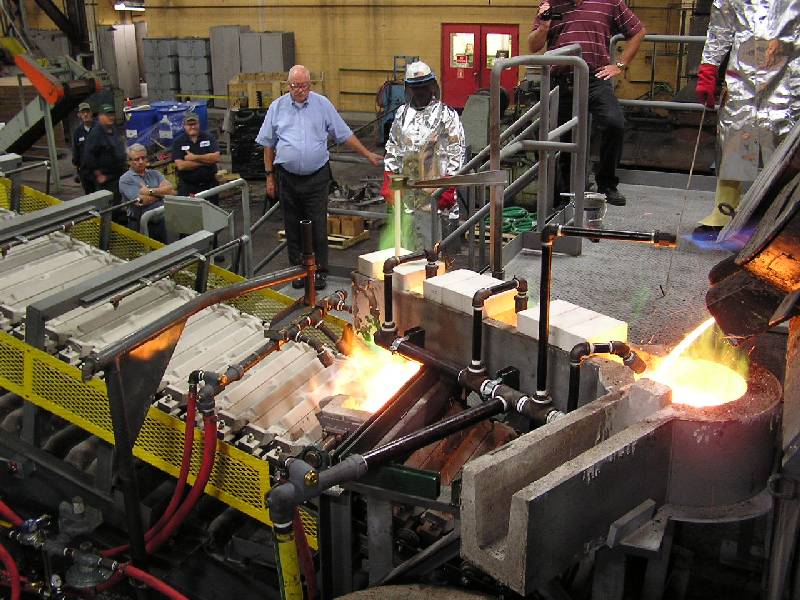
Durable Material Strength
Understood for its impressive rust resistance, Aluminum additionally exhibits exceptional material toughness that adds to its toughness in various applications. This combination makes Aluminum a suitable choice for industries varying from automobile to aerospace. Its light-weight nature does not endanger toughness; instead, it often outmatches heavier metals in both resilience and durability. The integral homes of Aluminum allow it to hold up against harsh environmental conditions, minimizing the demand for regular substitutes or repair services. Additionally, progressed Aluminum alloys further boost its toughness, making it ideal for high-stress applications. Producers can depend on Aluminum elements to maintain architectural honesty over time, making certain that items remain effective and trusted throughout their lifespan. This long-lasting product stamina settings Aluminum as a principal in cutting-edge product development.Design Adaptability and Aesthetic Charm
When thinking about manufacturing alternatives, the design versatility and visual appeal of Aluminum spreadings attract attention as substantial advantages. Aluminum's one-of-a-kind properties permit elaborate designs that would be challenging or impossible with various other materials. Its lightweight nature enables suppliers to develop complex shapes while keeping architectural stability. This adaptability assists in innovation, as designers can experiment with various types and features, resulting in creative options tailored to details applications.Aluminum can be quickly finished with various surface treatments, consisting of anodizing and powder coating, improving its visual allure. These surfaces not only enhance looks however also supply added defense versus ecological elements. The ability to create both aesthetically striking and useful parts makes Aluminum an eye-catching choice for markets ranging from auto to durable goods. Ultimately, the mix of layout flexibility and aesthetic convenience settings Aluminum spreadings as an engaging option for modern-day product development.
Cost-Effectiveness in Production
The benefits of Aluminum spreadings extend beyond their layout versatility and aesthetic allure to include substantial cost-effectiveness in production. Aluminum's lightweight nature reduces transportation costs, making it a cost-effective option for producers. The quick manufacturing cycles related to Aluminum spreading procedures, such as die spreading, contribute to much shorter preparations and enhanced throughput, permitting firms to meet market demands more efficiently.Furthermore, Aluminum's outstanding recyclability decreases material waste and the associated costs of resources. Making use of sophisticated spreading methods additionally enhances accuracy, reducing the demand for substantial post-processing and succeeding expenditures.

Sustainability and Environmental Advantages
While many sectors encounter enhancing pressure to take on lasting practices, Aluminum shops naturally provide significant environmental benefits. The use of Aluminum, an extremely recyclable product, enables decreased waste and lower power consumption during the production procedure. Recycling Aluminum needs just around 5% of the energy needed to create new Aluminum from resources, consequently lessening greenhouse gas discharges.Furthermore, Aluminum foundries typically apply advanced modern Aluminum Foundry technologies and procedures that boost energy performance, additional adding to their sustainability profile. The lightweight nature of Aluminum also leads to gas financial savings in transport and logistics, which is vital in numerous applications, including automobile and aerospace markets.
In addition, by using lasting sourcing approaches for basic materials and involving in liable waste management practices, Aluminum foundries can substantially lower their ecological impact. Generally, the ecological benefits of Aluminum factories make them an essential player in advertising sustainability within manufacturing.
Streamlined Production Processes
Furthermore, Aluminum foundries typically apply lean manufacturing principles, which concentrate on minimizing non-value-added activities. This approach causes boosted workflow, far better supply management, and prompt delivery of products.
Cooperation among groups is additionally a trademark of structured processes in Aluminum factories, making it possible for quicker problem-solving and technology. By promoting a society of continual improvement, these centers can adapt swiftly to altering market needs.
Regularly Asked Inquiries
What Types of Products Are Generally Used Aluminum Foundry Techniques?
Aluminum Foundry methods are frequently utilized to generate a selection of products, including vehicle components, aircraft parts, customer electronic devices real estates, cookware, and industrial equipment. These applications benefit from Aluminum's lightweight nature and superb corrosion resistance.Exactly How Does Aluminum Spreading Contrast to Various Other Products in Prototyping?
Aluminum casting deals remarkable strength-to-weight ratios and exceptional thermal conductivity compared to other materials. Its convenience and convenience of machining make it a preferred option for rapid prototyping, allowing effective model and design optimization in product advancement.What Safety And Security Steps Are Associated With Aluminum Foundry Processes?
Security actions in Aluminum Foundry procedures include proper ventilation, individual protective equipment, temperature tracking, and adherence to safety methods. Regular training and risk analyses are vital to alleviate hazards associated with molten steel handling.Exist Any Limitations to Utilizing Aluminum in Item Style?
The constraints of using Aluminum in item style include its fairly low strength contrasted to some steels, vulnerability to rust without correct treatments, and challenges in achieving high-temperature resistance, which may limit specific applications.How Can Firms Make Sure Quality Control in Aluminum Foundry Manufacturing?
Business can assure quality control in Aluminum Foundry production by executing extensive screening methods, using advanced monitoring technologies, developing clear manufacturing standards, and carrying out routine audits to preserve constant high quality throughout the manufacturing process.Aluminum Foundry plays an essential function in ingenious product development. In enhancement, the light-weight nature of Aluminum makes it possible for developers and engineers to create cutting-edge items that may not be practical with heavier metals. The phenomenal strength-to-weight proportion of Aluminum provides designers with unparalleled versatility in developing innovative products across different industries. Additionally, the inherent rust resistance of Aluminum decreases the demand for safety finishes, consequently decreasing maintenance expenses and enhancing the durability of products. Producers can count on Aluminum components to keep structural integrity over time, making sure that products remain reputable and reliable throughout their life expectancy.
Report this wiki page